The Story
An American girl, trapped between two tyrants
Mildred Schindler was born in Great Bend, Kansas in 1929 to German immigrant parents. As a baby she was carried back to Germany so her father could help run the family farm. She grew up under Hitler. Then the Red Army came — and the country she was born in was an ocean and a war away.
Act One / The Farm
A quiet life under a loud regime
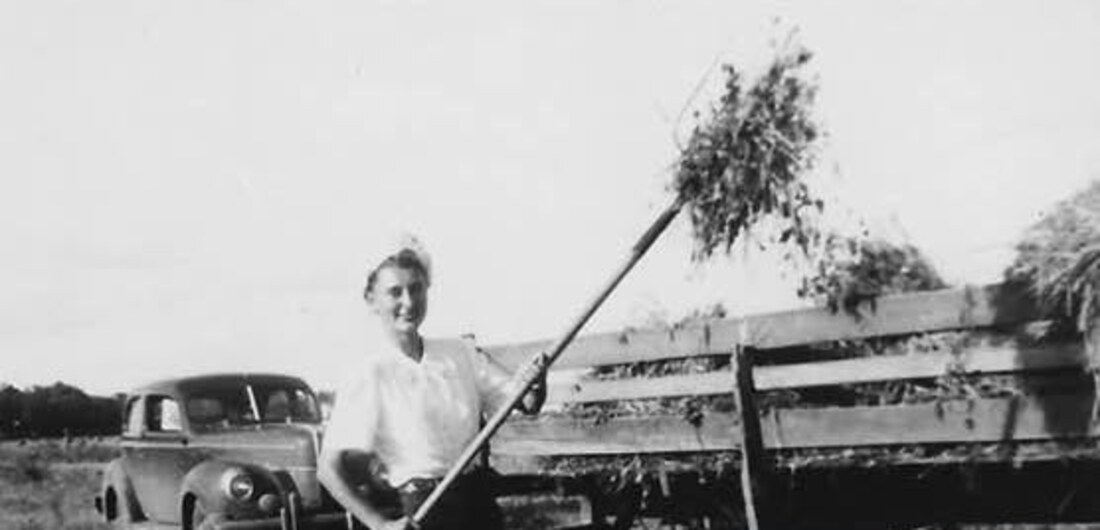
A Gentile Lutheran farm family in eastern Germany. Chores, church, harvest, a teenage girl’s ordinary ambitions — all of it lived out under the Third Reich, where the safest thing a family could be was unremarkable.
It is a perspective WWII cinema has rarely taken: not the camps, not the front, not the resistance cell — the farmhouse, where survival meant keeping your head down and your mouth shut, and where the war arrived last and stayed longest.
Act Two / The Capture
February 1945 — one month before her sixteenth birthday
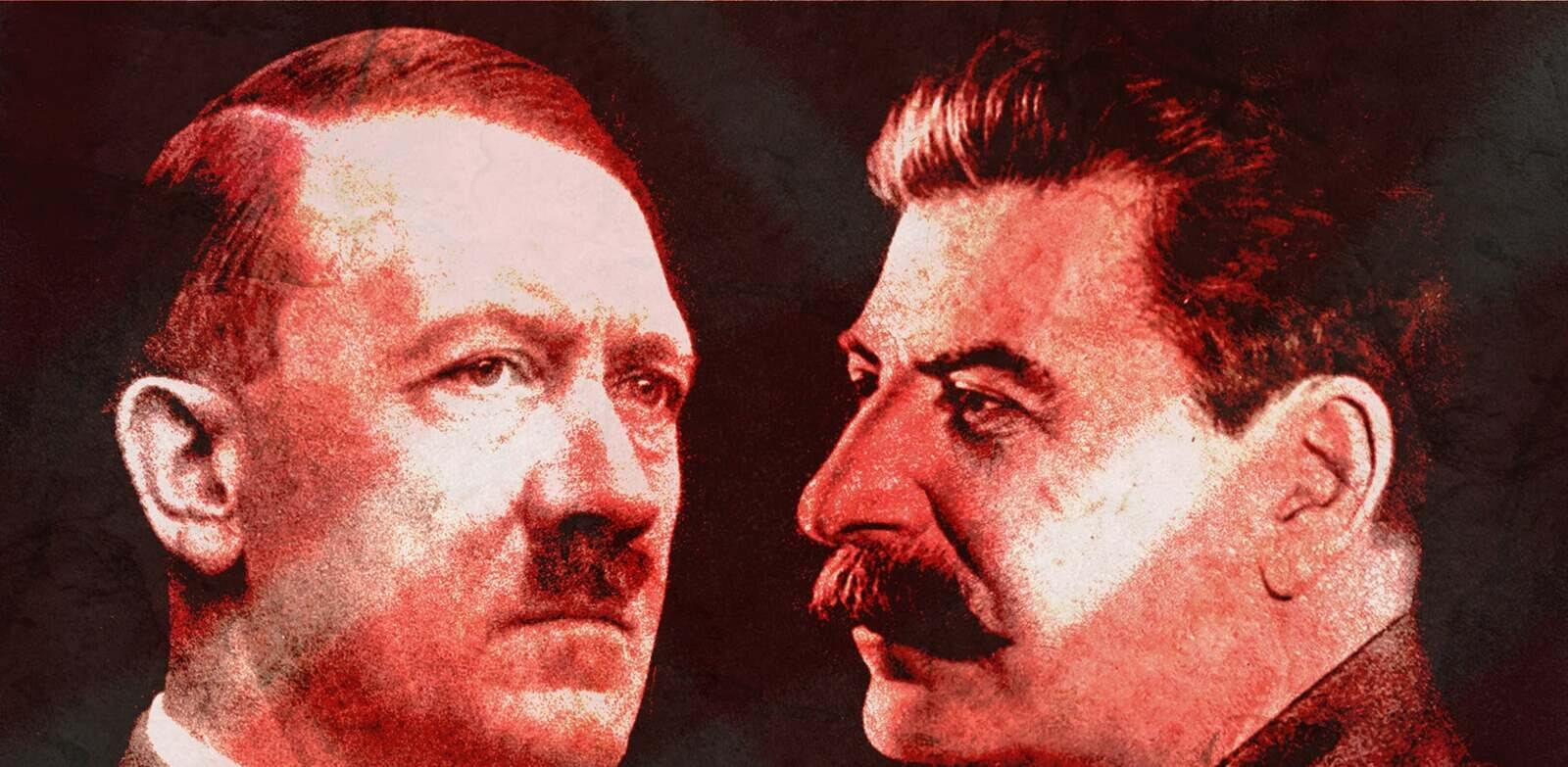
Russian soldiers take the farm. Her father is taken first. Her mother disguises Mildred to keep her off the work-camp lists — a deception that holds until the morning it doesn’t. She is pulled from her mother and brother and pushed into the refugee caravan moving west.
What follows is the spine of the film: a fifteen-year-old girl crossing a shattered continent alone, through checkpoints and boxcars and strangers who are either her salvation or her end, trying to find the people she has left.
Act Three / The Document
Proof of a homeland she had never seen
The turn is a piece of paper. A secret, hidden document surfaces — and with it, the possibility of a passage out that no one else in the caravan has: a claim on a country half a world away that she left as an infant and cannot remember.
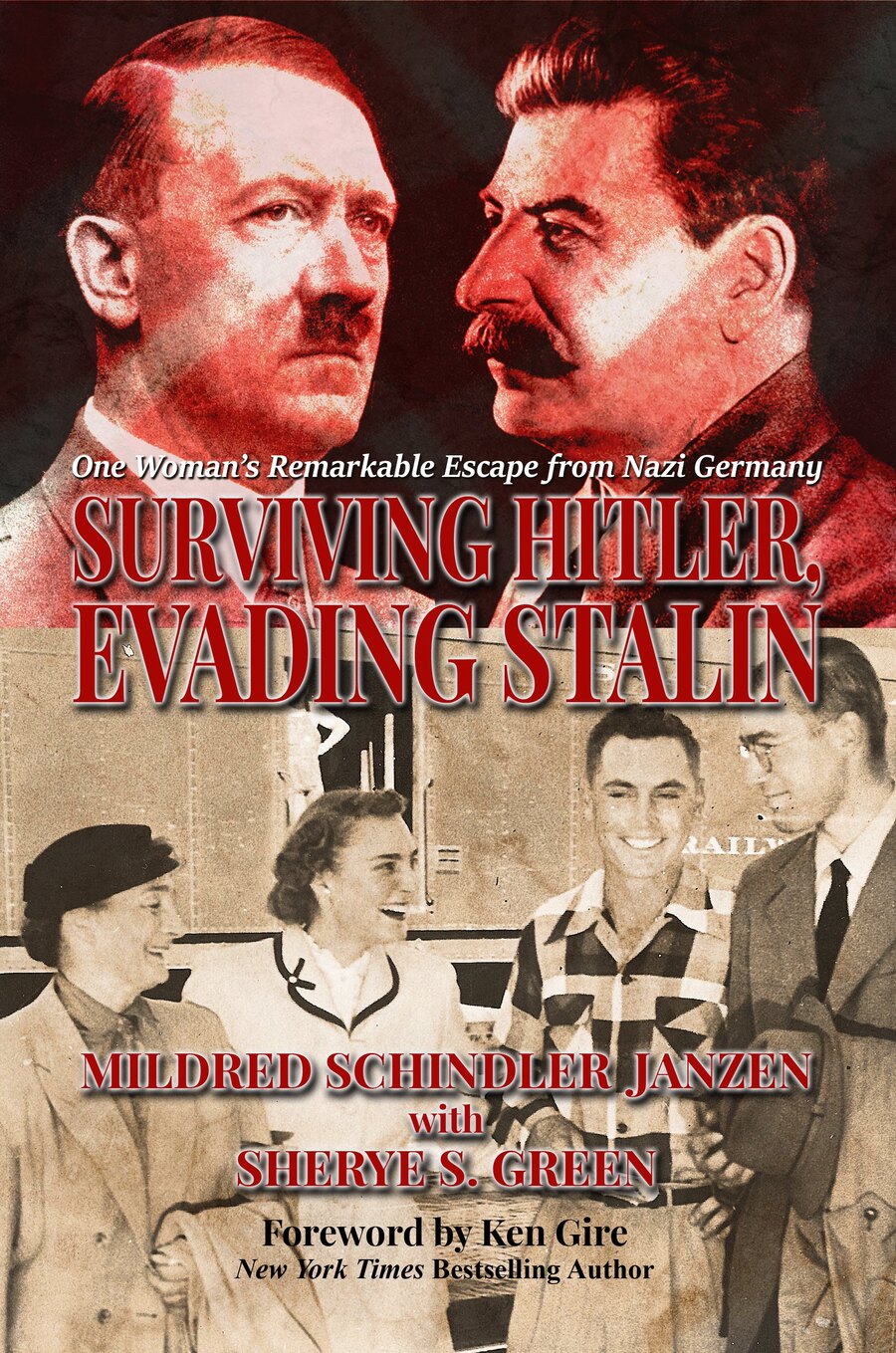
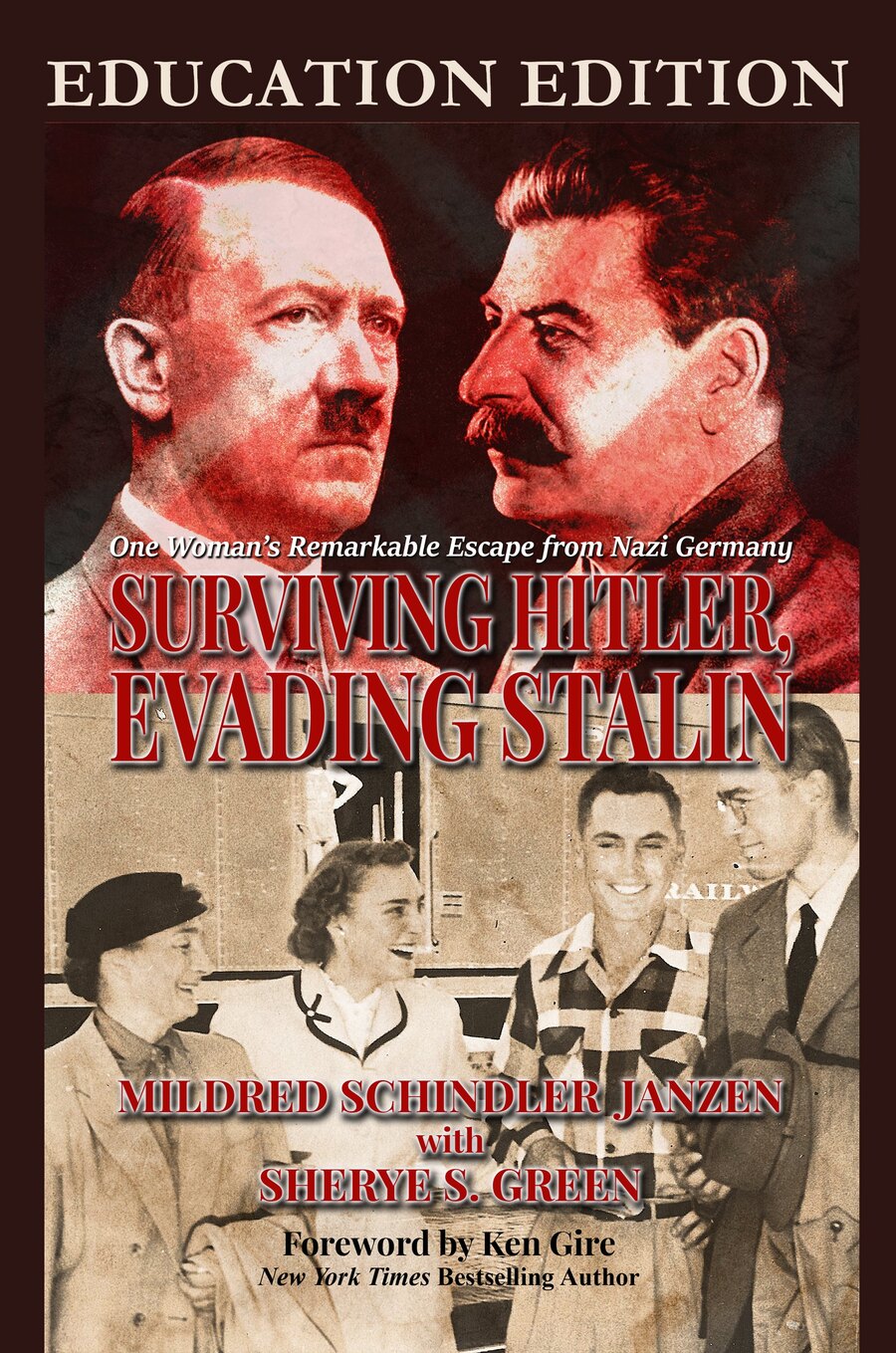
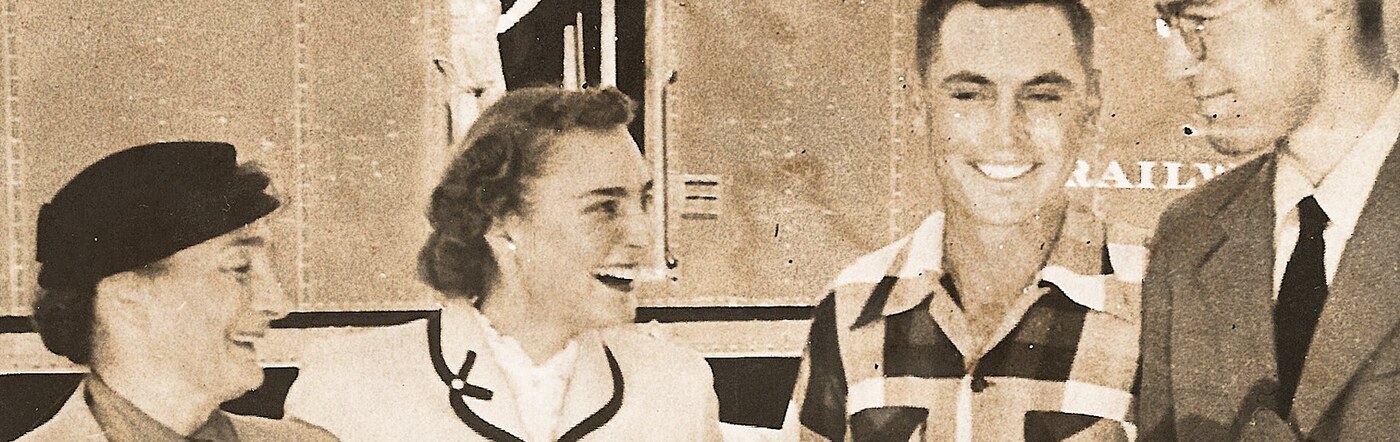
The third act is a citizenship thriller with a beating heart. It ends where the cover photograph was taken — a railway platform, a smile, and the beginning of a life in Kansas that would run another eighty years.